Retaining Walls on the Mornington Peninsula, VIC

Engineered and feature retaining walls in stone, block and timber for sloping blocks, coastal sites and hinterland properties, usually built as part of a wider landscape project rather than as a standalone wall.

Request a Quote

By submitting this form, you agree to our Privacy Policy.

Sleeper, Block and Rock Retaining Walls Built for Mornington Peninsula Slopes and Soils

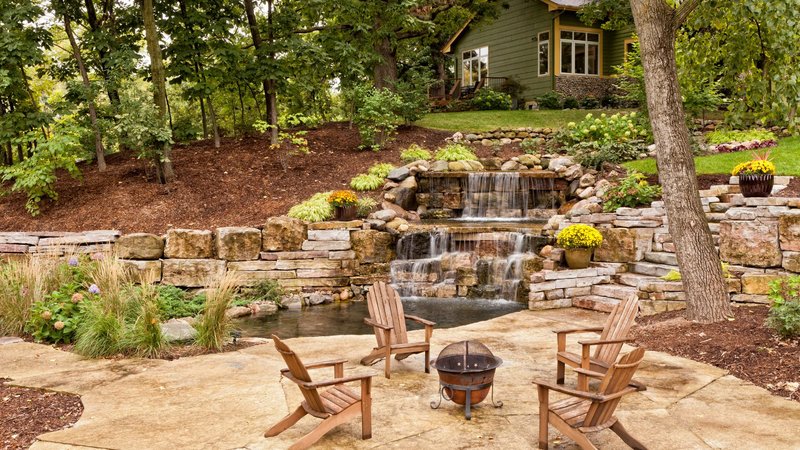
A sloping block can look great from the street and still be hard to live on. The back lawn slides toward the fence. The garden bed slumps after every wet winter. A retaining wall fixes that by holding soil where you want it and giving you flat, usable ground. We build sleeper walls with galvanised steel posts, core-filled concrete block walls, interlocking segmental block systems, sandstone block walls and natural rock walls. Each one sits on a properly set concrete footing or a compacted crushed rock base, depending on the wall type.

Soil conditions change a lot across the Mornington Peninsula. Near the bay around Rosebud and Rye you are often building into loose coastal sand that won't hold a cut face for long. Up in the hinterland around Red Hill and Main Ridge, heavy clay holds water and swells when it's wet. Our cool, changeable winters soak the ground behind a wall again and again. That water builds pressure, and poor drainage is the main reason walls lean, bulge or crack. We install slotted ag pipe in a geotextile sock, backfill with clean drainage aggregate and run the water to a proper outlet so it can't build up behind the wall.

A lot of our retaining work is part of a bigger job. You might need a level pad for a pool, a terrace for an outdoor dining area, or steps cut into a steep front garden. We often build walls as part of full landscape construction projects, and we can finish the levelled area with paving and natural stone so the whole space works together. If your property is on the coast or on acreage, we'll plan the wall around wind, salt exposure and run-off from the wider site.

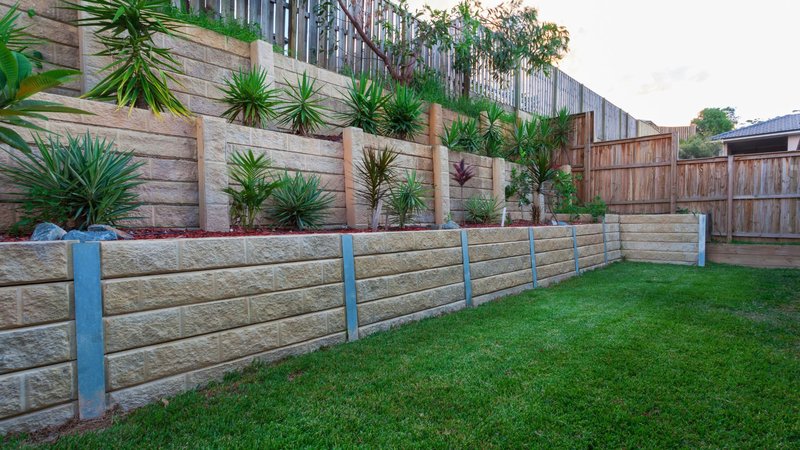
  • Concrete sleeper walls with hot-dip galvanised steel posts
  • Treated pine and hardwood timber sleeper walls
  • Core-filled concrete block walls with steel reinforcement
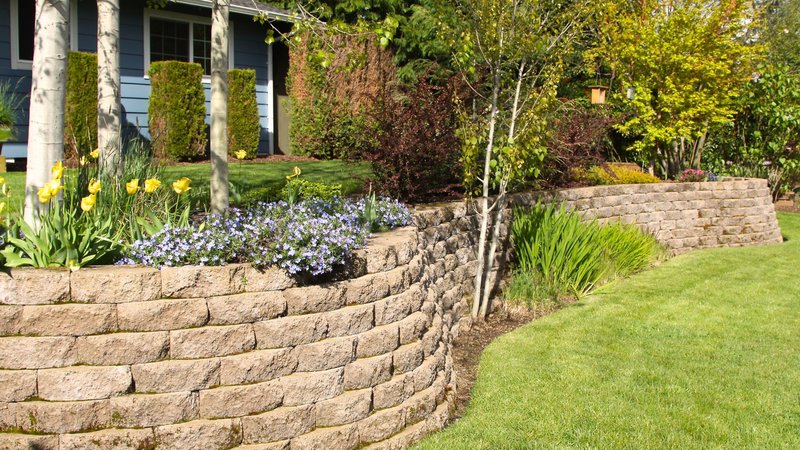
  • Interlocking segmental block walls for curves and terraces
  • Natural rock and boulder walls placed by excavator
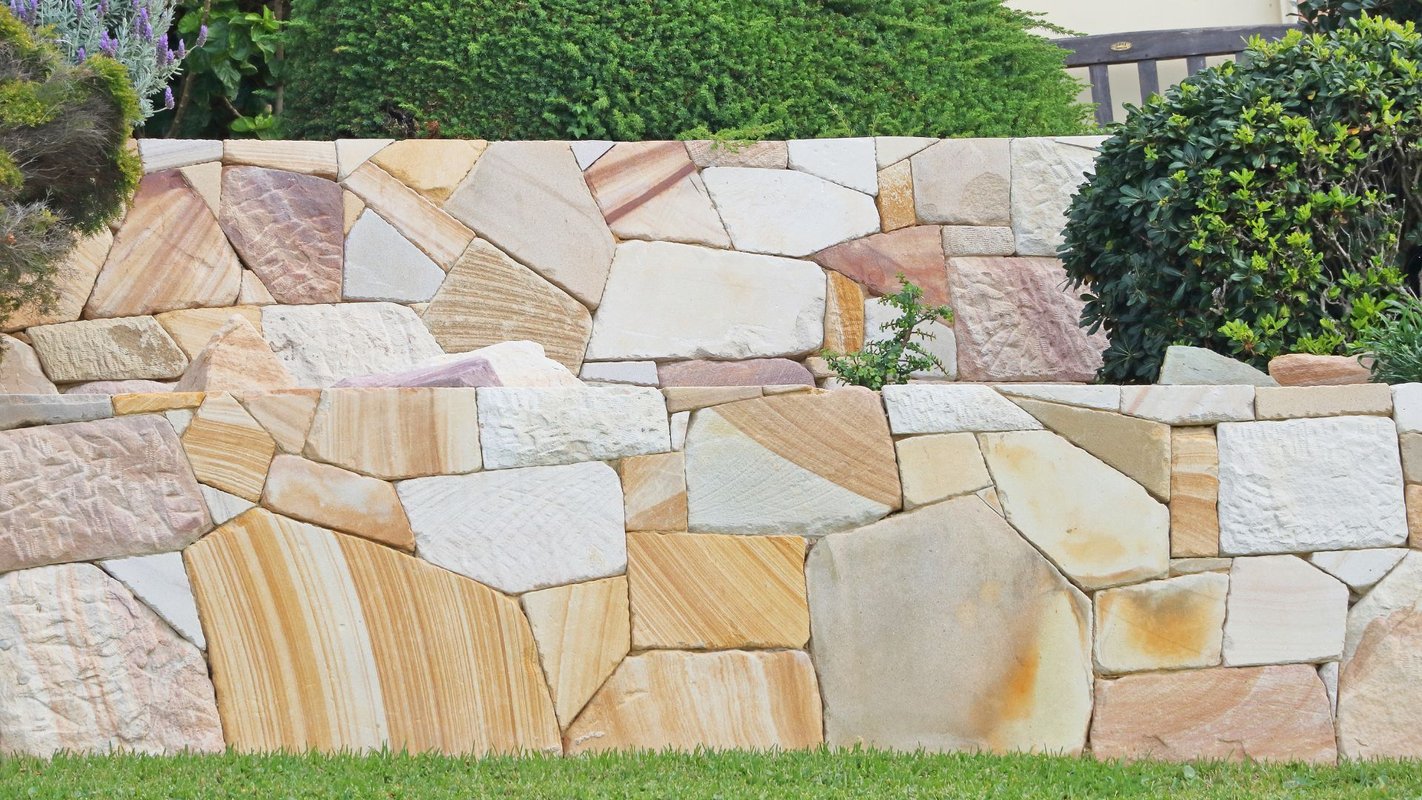
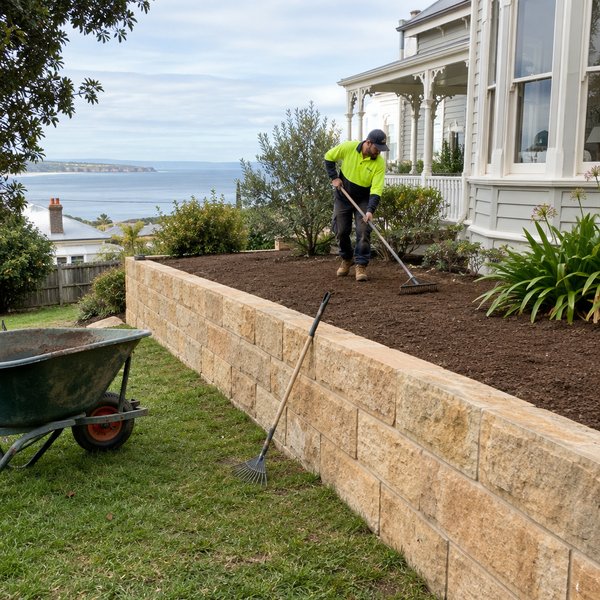
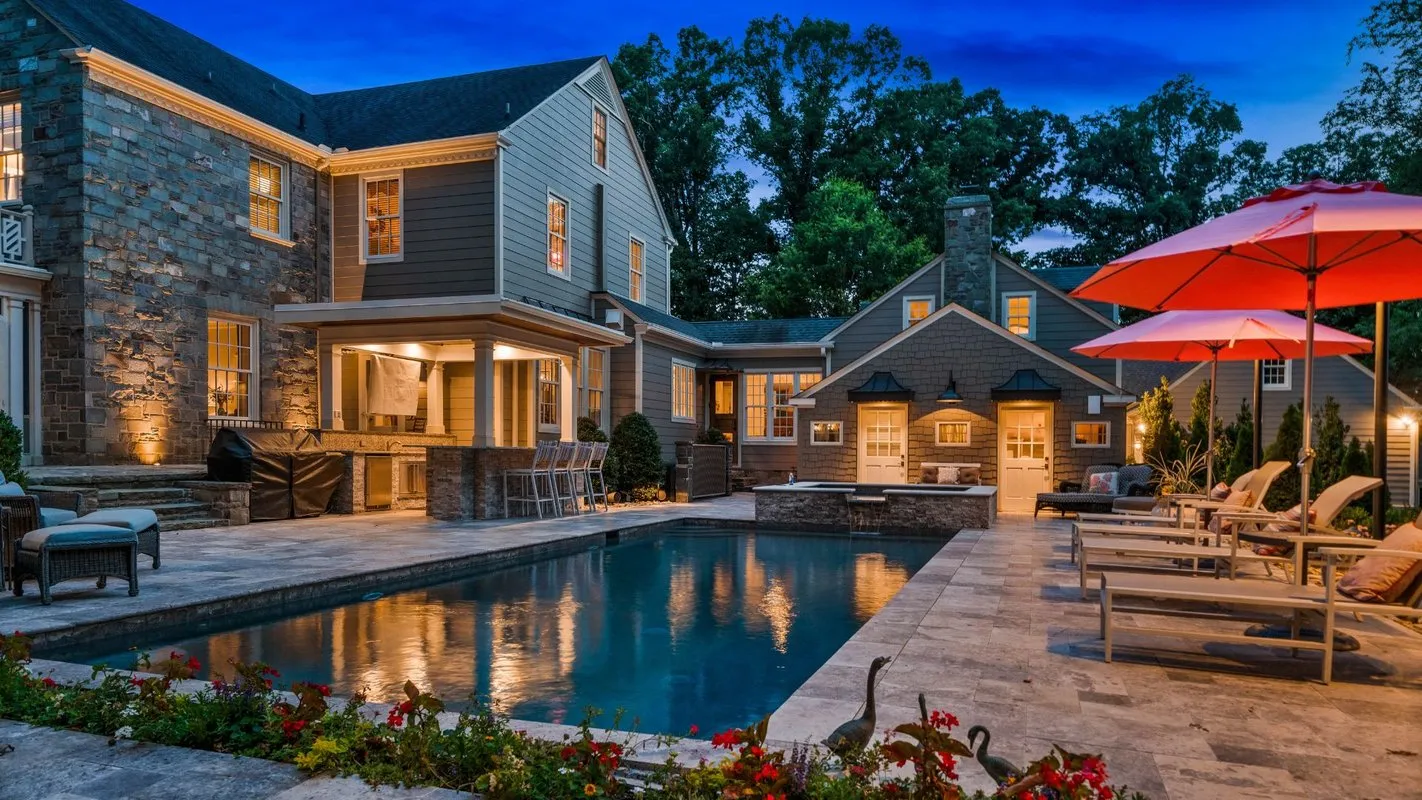
  • Sandstone block walls for formal gardens and pool surrounds
  • Ag pipe drainage, geotextile fabric and aggregate backfill
  • Removal and rebuilding of failed or leaning walls

How We Build Retaining Walls on Mornington Peninsula Slopes

From taking levels and digging footings to drainage and final backfill

Step 1: Site Assessment, Levels and Soil Check

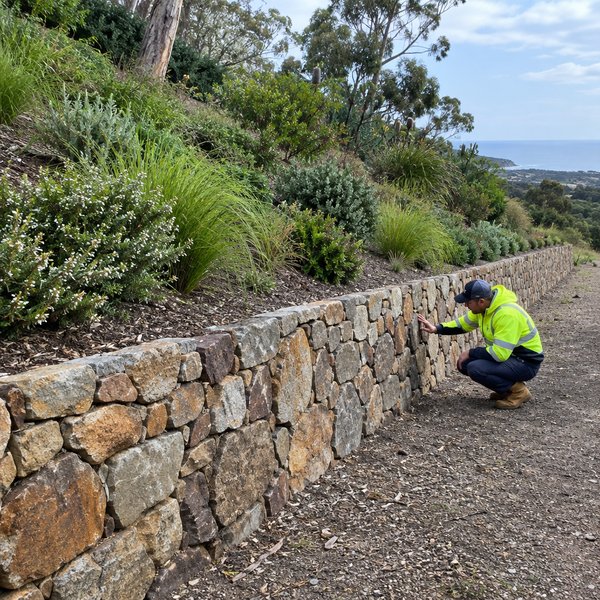
We walk the site and take levels to work out wall height, length and where the finished ground will sit. We check the soil type, look for existing services and note where water flows during rain. Taller walls, or walls close to boundaries, buildings or driveways, may need engineering and a building permit, and we tell you this upfront.

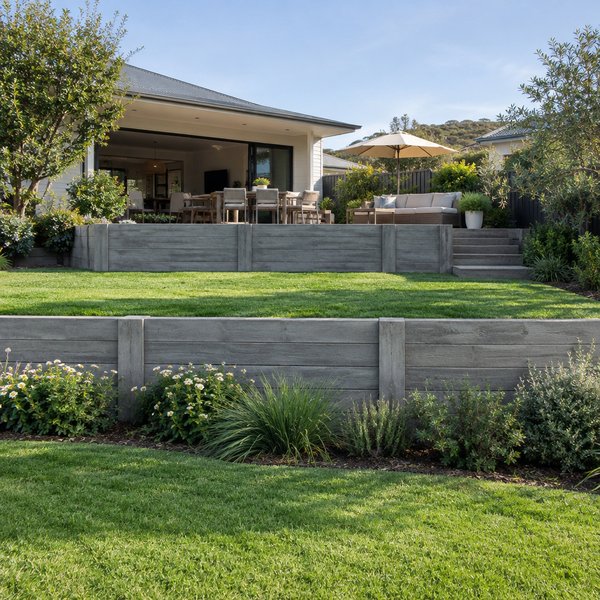
Retaining Walls - Site Assessment, Levels and Soil Check in the Mornington Peninsula

Step 2: Excavation and Footing Preparation

We use a compact excavator to cut back the slope and dig the footing trench or post holes. For sleeper walls we set galvanised steel posts in concrete. For block and rock walls we lay and compact a crushed rock base with a plate compactor so the first course sits level and solid.

Retaining Walls - Excavation and Footing Preparation in the Mornington Peninsula

Step 3: Building the Wall and Installing Drainage

We build the wall course by course, checking level and line as we go. Slotted ag pipe in a geotextile sock goes in at the base behind the wall and runs to a suitable outlet. We line the soil face with geotextile fabric so fine sand and clay can't wash into the drainage layer and clog it.

Retaining Walls - Building the Wall and Installing Drainage in the Mornington Peninsula

Step 4: Backfill, Compaction and Final Finish

We backfill behind the wall with clean drainage aggregate, then compact the soil above it in layers so the ground doesn't sink later. We shape the top for garden beds, turf or paving and clean up the site. Before we leave, we show you where the drainage outlet runs and what to keep an eye on.

Retaining Walls - Backfill, Compaction and Final Finish in the Mornington Peninsula

What a Properly Built Retaining Wall Does for Your Property

More usable space, less erosion and a wall that holds up through wet winters

More Flat Ground You Can Actually Use

A well-placed wall turns a slope you walk around into space for a lawn, a vegetable patch, an entertaining area or a play space for the kids. Terraced walls on steep blocks can give you several usable levels instead of one awkward hill. You get more out of the land you already own.

More Flat Ground You Can Actually Use - Retaining Walls in the Mornington Peninsula

Less Erosion and Soil Washing Into Your Yard

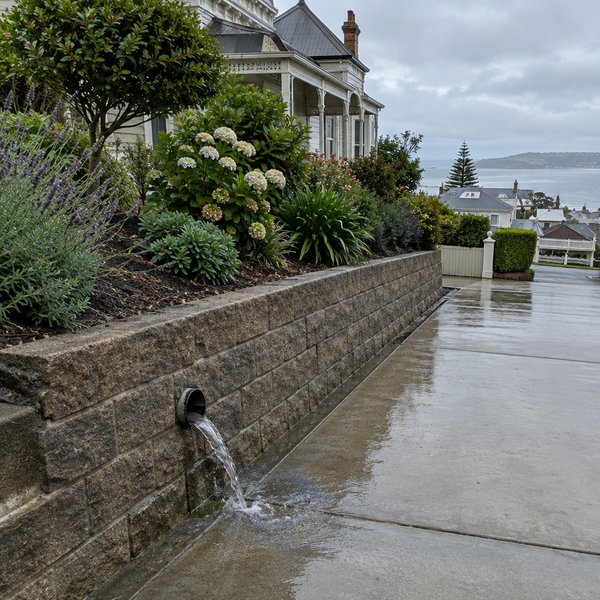
Heavy winter rain on the Peninsula can wash sandy soil and mulch off a slope and onto paths, driveways and neighbouring properties. A retaining wall with proper drainage holds the soil in place and sends water to an outlet. Garden beds stay put, and you spend less time shovelling soil back where it belongs.

Less Erosion and Soil Washing Into Your Yard - Retaining Walls on the Mornington Peninsula

A Wall That Stays Straight Through Wet Winters

Most wall failures come from water pressure and weak footings, not from the wall material. Because we focus on footings, drainage and compaction, your wall is far less likely to lean, bulge or crack as the ground gets wet and dries out over the seasons. That means fewer repairs and less chance of a costly rebuild.

A Wall That Stays Straight Through Wet Winters - Retaining Walls on the Mornington Peninsula

Why Mornington Peninsula Homeowners Trust Us With Their Retaining Walls

We Know Peninsula Soils, From Coastal Sand to Hinterland Clay

Building into loose sand near the bay is very different from cutting into heavy clay around Red Hill. We adjust footing depth, drainage and backfill to suit the ground we're working in. That local knowledge helps prevent the slumping and leaning we often get called out to fix.

Drainage Is Built In, Not Added Later

Every wall we build includes ag pipe, geotextile fabric and clean aggregate backfill with a planned outlet. Our wet, changeable winters put real pressure on retaining walls. We treat drainage as the most important part of the job.

Our Own Machinery for Tight and Steep Sites

We use compact excavators, plate compactors and laser levels to work on narrow side access, steep blocks and acreage alike. Placing heavy rock and concrete sleepers accurately takes the right gear. It also means less hand-digging and a cleaner site.

One Team From Wall to Finished Garden

We also handle paving, decking, pool landscaping and outdoor entertaining areas. Your retaining wall can be planned with the finished space in mind, so levels, steps and drainage all line up. You deal with one team instead of coordinating several trades.

Retaining Wall Questions From Mornington Peninsula Homeowners

Common questions answered

Do I need a permit for a retaining wall on the Mornington Peninsula?

It depends on the wall height, how close it is to a boundary or building, and whether it supports a driveway, structure or other load. Taller walls and walls carrying extra load usually need engineering and a building permit. We assess this during the site visit and can coordinate the engineering and permit work if your wall needs it.

What does a retaining wall cost?

The main cost factors are the wall height and length, the material you choose, how much excavation and soil removal is needed, and how easy it is to get machinery into the site. Engineering, permits and removing an old wall add to the cost too. We measure up on site and give you an itemised quote so you can compare material options.

Should I choose timber sleepers or concrete sleepers?

Timber sleepers cost less upfront and look natural, but they can rot over time, especially in damp clay or where they stay wet through winter. Concrete sleepers with galvanised steel posts handle moisture and termites much better and suit most Peninsula sites. We'll recommend what suits your soil, wall height and budget.

How long does it take to build a retaining wall?

Timing depends on the wall length and height, the material, access for the excavator and whether engineering or permits are needed before we start. Changeable Peninsula weather can also pause excavation, since we don't pour footings or compact backfill in saturated ground. We give you a realistic timeline once we've seen the site.

My existing wall is leaning. Can it be fixed or does it need replacing?

A lean usually points to failed drainage, rotten posts or a footing that was too shallow. Sometimes we can rebuild a section, but if the posts have rotted or the whole wall has moved, replacing it with proper footings and drainage is the safer long-term fix. We'll inspect it and explain what's causing the problem before recommending anything.

Retaining Walls Service Areas

We provide Retaining Walls throughout the Mornington Peninsula, VIC and surrounding suburbs.

Don't see your area? Contact us to check if we service your location!

View All Areas

Get a Quote for Your Retaining Wall on the Mornington Peninsula

Tell our team what you need and request a quote.

(03) 5907 1351